

Introduction to Self-Driving Cars in the USA
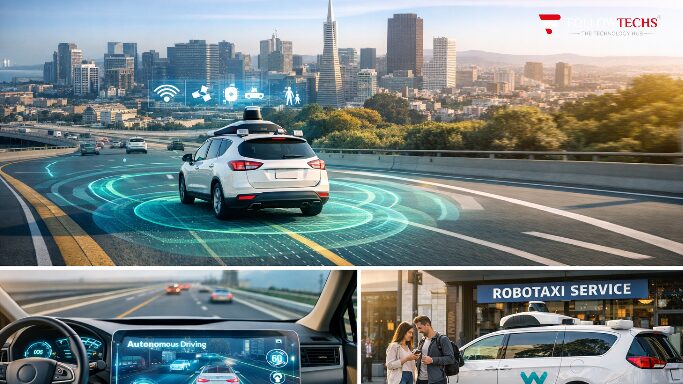
Explore the future of self-driving cars in the USA, including the latest technology trends, safety benefits, and challenges facing autonomous vehicles today.
What Are Autonomous Vehicles?
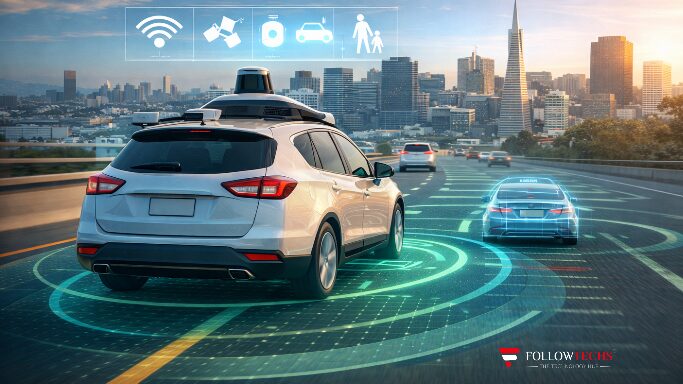
Autonomous vehicles (AVs) refer to cars that can operate independently of human control. Unlike traditional vehicles, which require drivers to make all decisions related to steering, acceleration, braking, and navigation, AVs use a combination of hardware and software to perform these tasks automatically.
Core Components of Autonomous Vehicles
- Sensors: Autonomous vehicles are equipped with an array of sensors that provide real-time data about their surroundings. These include cameras, radar, LiDAR (Light Detection and Ranging), and ultrasonic sensors. Each sensor type plays a specific role in detecting obstacles, other vehicles, pedestrians, and road conditions.
- Artificial Intelligence (AI): AI processes the data collected by sensors to interpret the environment, identify objects, make decisions, and control the vehicle’s movements.
- Control Systems: These systems translate AI decisions into physical actions such as turning the steering wheel, applying brakes, or accelerating.
- Connectivity: Many autonomous vehicles are connected to the internet and other vehicles, enabling communication that enhances safety and efficiency.
Why Autonomous Vehicles Matter
The development of self-driving cars is driven by the goal of reducing traffic accidents caused by human error, improving traffic flow, and providing mobility solutions to those unable to drive. With nearly 94% of serious crashes attributed to human error according to the National Highway Traffic Safety Administration (NHTSA), autonomous vehicles could drastically reduce accidents and fatalities.
The Levels of Autonomous Driving (Level 0 to Level 5)
The Society of Automotive Engineers (SAE) classifies autonomous driving technology into six levels, from Level 0 (no automation) to Level 5 (full automation). Understanding these levels helps clarify where current technologies stand and what future advancements might bring.
Level 0 – No Automation
At this level, the driver is fully responsible for all aspects of driving. There may be warning systems like collision alerts, but no vehicle control is automated.
Level 1 – Driver Assistance
Vehicles at this level offer limited assistance such as adaptive cruise control or lane-keeping assistance. The driver must remain engaged and control most driving functions.
Level 2 – Partial Automation
Level 2 vehicles can control both steering and acceleration/deceleration simultaneously under certain conditions. However, the driver must continuously monitor the environment and be ready to take control immediately.
Examples: Tesla Autopilot, GM Super Cruise.
Level 3 – Conditional Automation
At this level, the vehicle can manage all aspects of driving under specific conditions, such as highway driving, without driver intervention. However, the driver must be prepared to take over when the system requests.
Examples: Audi’s Traffic Jam Pilot (limited deployment).
Level 4 – High Automation
Level 4 vehicles can operate autonomously without human intervention in defined environments and conditions (geofenced areas, specific weather). Outside these conditions, human control is required.
Examples: Waymo’s autonomous taxis in specific cities.
Level 5 – Full Automation
The highest level where the vehicle can drive itself anywhere, anytime, under any conditions without any human input. Level 5 cars require no steering wheel or pedals.
Currently, Level 5 vehicles remain in development and testing phases with no mass-market availability.
How Self-Driving Cars Work
The operation of self-driving cars involves an intricate combination of hardware and software that work in harmony to perceive the environment, make decisions, and drive safely.
AI in Cars
Artificial intelligence is the core technology that enables autonomous driving. AI systems analyze sensor data, recognize objects like pedestrians and other vehicles, and predict movements. Machine learning algorithms improve performance by learning from vast amounts of driving data, enabling vehicles to handle complex and dynamic situations.
Sensors and Cameras
Self-driving cars use multiple sensor types for robust environmental perception:
- Cameras: Provide visual information similar to a human eye. They recognize traffic signs, lane markings, pedestrians, and other vehicles.
- Radar: Uses radio waves to detect objects and measure their speed and distance, effective even in poor visibility.
- LiDAR: Emits laser beams to create precise 3D maps of surroundings, capturing the shape and distance of objects in high detail.
- Ultrasonic Sensors: Detect nearby objects, particularly useful for parking and close-range navigation.
The combination of these sensors creates a comprehensive 360-degree view around the vehicle.
Machine Learning and Data Processing
Once sensor data is collected, it is processed by AI models that classify objects, predict their trajectories, and plan safe routes. Machine learning models continuously improve via training on millions of miles of driving data, including real-world and simulated environments.
Decision-Making and Control
After interpreting the environment, the autonomous system makes real-time decisions about speed, direction, and maneuvers. These commands are sent to the vehicle’s control systems to execute steering, acceleration, and braking smoothly and safely.
Major Companies Developing Autonomous Vehicles in the U.S.
The United States is home to many leading companies pioneering autonomous vehicle technology. Their innovations, investments, and testing programs are accelerating the arrival of self-driving cars.
Waymo
Waymo, a subsidiary of Alphabet Inc., is one of the most advanced developers of Level 4 autonomous vehicles. With millions of miles driven in real-world conditions, Waymo operates autonomous ride-hailing services in select cities like Phoenix, Arizona.
Tesla
Tesla’s Autopilot system offers Level 2 automation with features like lane centering and adaptive cruise control. Tesla is aggressively developing Full Self-Driving (FSD) software, aiming for higher autonomy levels, although regulatory approval and technical challenges remain.
Cruise
Owned by General Motors, Cruise focuses on urban autonomous ride-sharing. Their vehicles are designed for dense city environments and have undergone extensive public road testing in San Francisco.
Aurora
Aurora Innovation develops autonomous driving systems targeting both passenger vehicles and freight trucks. Founded by former leaders from Google, Tesla, and Uber’s autonomous programs, Aurora emphasizes safety and scalability.
Ford
Ford is investing heavily in autonomous vehicle technology through its subsidiary, Argo AI. The company is working toward commercial deployment of autonomous ride-hailing and delivery fleets.
Other Notable Players
- Uber ATG (now part of Aurora)
- Zoox (owned by Amazon)
- Nuro (focused on autonomous delivery vehicles)
Benefits of Self-Driving Cars in the USA
The widespread adoption of autonomous vehicles offers numerous benefits across safety, mobility, environment, and economy.
Improved Road Safety
Human error accounts for the majority of traffic accidents. Autonomous vehicles can significantly reduce crashes by eliminating distracted, impaired, and fatigued driving.
Enhanced Mobility
Self-driving cars in the USA can provide mobility for people who are elderly, disabled, or otherwise unable to drive, improving independence and quality of life.
Reduced Traffic Congestion
By optimizing driving patterns and communicating with other vehicles and infrastructure, autonomous vehicles can reduce traffic jams and improve travel times.
Environmental Advantages
Autonomous vehicles can improve fuel efficiency through smoother driving and support electric vehicle adoption, contributing to lower emissions.
Economic Growth and Job Creation
New industries around autonomous technology, maintenance, and services will create jobs and stimulate economic activity.
Challenges and Risks of Autonomous Vehicles
Despite their promise, self-driving cars in the USA face several complex challenges that must be addressed for safe, widespread use.
Technical and Safety Challenges
- Ensuring reliable operation in diverse weather, lighting, and road conditions.
- Handling unpredictable behaviors of other road users.
- Avoiding software bugs and hardware failures.
Regulatory and Legal Issues
- Developing comprehensive laws and standards for autonomous vehicle operation.
- Addressing liability and insurance concerns in accidents involving AVs.
Cybersecurity Threats
Autonomous vehicles are vulnerable to hacking, which could jeopardize safety and privacy.
Ethical and Social Concerns
Programming ethical decision-making in unavoidable accident scenarios remains a challenge. There are also concerns about job displacement in driving professions.
Public Acceptance
Building trust among consumers and gaining public acceptance is crucial for adoption.
The Future of Self-Driving Cars in the United States
The future promises gradual but transformative changes driven by autonomous vehicle technology.
Expansion of Autonomous Ride-Sharing
Companies are developing fleets of self-driving cars for ride-hailing services, which could reduce private car ownership and urban congestion.
Integration with Smart Infrastructure
Smart traffic lights, connected road sensors, and vehicle-to-everything (V2X) communication will enhance safety and efficiency.
Autonomous Freight Transport
Driverless trucks will revolutionize logistics, reducing costs and improving delivery times.
Government Policies and Infrastructure
Supportive regulations and investments in infrastructure will accelerate deployment.
Increased Public Awareness and Trust
Education and exposure to autonomous vehicles will foster acceptance.
Conclusion on Self -Driving Cars in the USA
Self-driving cars in the USA and autonomous vehicles stand at the brink of revolutionizing transportation in the United States. Powered by AI, advanced sensors, and machine learning, they offer the promise of safer roads, greater mobility, and environmental benefits. While challenges in technology, regulation, and ethics remain, ongoing innovation by leading companies and supportive policies are paving the way for an autonomous future.
As these vehicles become more prevalent, they will reshape how we live, work, and move, marking a significant milestone in the evolution of transportation.
