
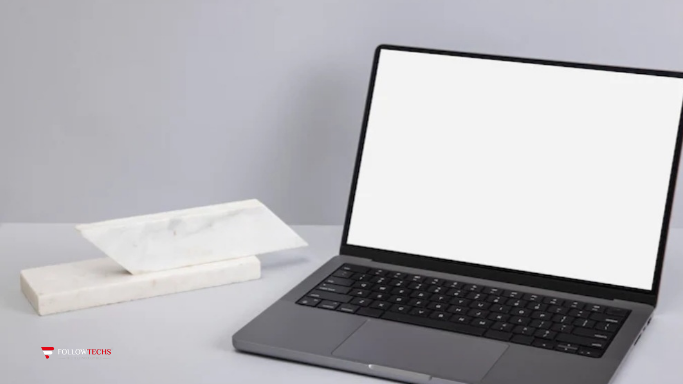

Introduction
The Apple MacBook Pro has established itself as a premier choice for professionals and creatives around the world. Known for its powerful hardware, refined design, and seamless software integration, the MacBook Pro continues to set the standard for high-performance laptops. Whether you’re a video editor, software developer, graphic designer, or business executive, the MacBook Pro offers a blend of speed, efficiency, and portability that few competitors can match.
In this comprehensive guide, we will explore every aspect of the Apple MacBook Pro—from design and display quality to performance powered by Apple’s latest Silicon chips. We’ll also discuss battery life, software experience, pros and cons, and how it compares to other laptops in the market today. By the end, you will have a clear understanding of what makes the MacBook Pro a standout choice for professionals in 2024.
Overview of Apple MacBook Pro
The Apple MacBook Pro is designed with professionals in mind, offering a balance between portability and raw power. Since its introduction in 2006, the MacBook Pro has undergone significant transformations, evolving from Intel processors to Apple’s own Silicon chips, which have drastically enhanced performance and energy efficiency.
The current MacBook Pro lineup includes models with 13-inch, 14-inch, and 16-inch screens, catering to a variety of professional needs and preferences. These laptops feature Apple’s custom-designed M1, M2, and recently launched M3 chips, which integrate CPU, GPU, and Neural Engine into a single chip to optimize speed and battery performance.
Apple continues to innovate with the MacBook Pro, adding features like the Liquid Retina XDR display, improved audio systems, and a wide array of ports that were missing in earlier models. The MacBook Pro remains a top-tier device for professionals who demand reliability, performance, and a premium user experience.
Design and Build Quality
Apple’s design philosophy emphasizes minimalism, durability, and elegance, and the MacBook Pro is a perfect example of this ethos. The chassis is crafted from a single piece of aluminum using precision machining, resulting in a sturdy yet lightweight device. This unibody design not only enhances durability but also contributes to the MacBook Pro’s sleek and premium look.
The MacBook Pro models weigh between 3 and 4.7 pounds depending on the screen size, making them portable enough for professionals on the move without compromising on screen real estate or performance components.
The Magic Keyboard, introduced to address the issues of previous butterfly keyboards, offers a comfortable and responsive typing experience, with well-spaced keys and a satisfying tactile feel. The large Force Touch trackpad supports pressure sensitivity and multi-touch gestures, delivering precise control and an intuitive user interface.
Importantly, Apple has reintroduced a broader selection of ports on the latest MacBook Pro models. Users now benefit from HDMI, an SD card reader, three Thunderbolt 4/USB-C ports, MagSafe 3 charging, and a headphone jack. This array of ports reduces reliance on external adapters, a common complaint in earlier MacBook iterations.
The MacBook Pro’s build quality not only feels premium but is engineered to withstand daily wear and tear, making it a durable companion for heavy users.
Display and Audio Quality
Apple has continually pushed the boundaries when it comes to display technology, and the MacBook Pro is no exception. The 14-inch and 16-inch MacBook Pro models feature Liquid Retina XDR displays, which use mini-LED technology to deliver stunning picture quality.
These displays offer up to 1600 nits of peak brightness, deep contrast ratios exceeding 1,000,000:1, and support the P3 wide color gamut. This makes them ideal for professionals working in video editing, photography, and design, where color accuracy and brightness are critical.
True Tone technology automatically adjusts the display’s white balance based on ambient lighting, ensuring comfortable viewing in different environments. The addition of ProMotion technology with refresh rates up to 120Hz ensures smooth scrolling, fluid animations, and reduced eye strain.
Audio quality matches the visual experience with a six-speaker system that delivers spatial audio and dynamic wide stereo sound. The speakers produce rich, clear audio with impressive bass response, making the MacBook Pro ideal for multimedia consumption and professional audio work. The studio-quality microphones enhance voice recording and video calls, providing crisp and clear sound.
Performance and Apple Silicon (M1, M2, M3)
The introduction of Apple Silicon has been a watershed moment for the MacBook Pro. The M1 chip, launched in 2020, was the first Apple-designed SoC (System on Chip) for Mac, combining CPU, GPU, and Neural Engine cores into a single, efficient unit.
The M1 offered exceptional performance gains over previous Intel-based models, with significantly improved power efficiency leading to extended battery life. The M2 chip built upon this foundation with higher CPU and GPU core counts, faster memory bandwidth, and enhanced machine learning capabilities.
The M3 chip, the latest in the lineup, uses a more advanced fabrication process to boost speed and efficiency even further. It offers better CPU and GPU performance, improved AI processing with the Neural Engine, and optimized thermal management.
Thanks to Apple’s unified memory architecture, data flows seamlessly between the CPU, GPU, and other components, minimizing latency and maximizing responsiveness. This architecture allows configurations up to 64GB of unified memory and up to 8TB of ultra-fast SSD storage, making the MacBook Pro suitable for the most demanding professional workflows.
The MacBook Pro handles complex tasks like 4K video editing, 3D rendering, and software compilation with ease. Additionally, Apple Silicon’s efficiency means that these high-performance operations come with less heat generation and quieter fan operation.

Battery Life and Charging
Battery life has always been a strong suit for the MacBook Pro, and Apple Silicon has only improved this further. The 14-inch model offers up to 17 hours of video playback, while the 16-inch version extends this to an impressive 21 hours under typical usage conditions.
This endurance is a major advantage for professionals who need to work on the go without frequent access to power outlets. The power efficiency of the M-series chips plays a crucial role in delivering this long battery life without sacrificing performance.
Charging has also been enhanced with the return of MagSafe 3, a magnetic charging connector that prevents accidental disconnections and potential damage. The MacBook Pro supports fast charging, achieving up to 50% charge in roughly 30 minutes when using a compatible power adapter.
Moreover, USB-C Power Delivery allows for flexible charging options with compatible third-party chargers and accessories, making it convenient for users who travel with different devices.
Software and macOS Experience
macOS is a critical part of the MacBook Pro’s appeal. The operating system is known for its stability, security, and smooth user experience. The latest macOS versions are optimized specifically for Apple Silicon, ensuring apps launch quickly, run efficiently, and take full advantage of the hardware capabilities.
One of macOS’s standout features is its seamless integration with the broader Apple ecosystem. Continuity features such as Handoff allow users to switch between devices effortlessly, while AirDrop facilitates quick file sharing without cables. Universal Control enables a single mouse and keyboard to control multiple Apple devices simultaneously, boosting productivity for users with multi-device setups.
Professional apps like Final Cut Pro, Logic Pro, and Xcode are optimized for Apple Silicon, providing enhanced performance and efficiency. Additionally, many third-party applications have been updated to run natively on Apple Silicon, ensuring compatibility and speed.
macOS also includes built-in security features such as Gatekeeper, FileVault encryption, and the Apple T2 Security Chip (in older Intel models) or the integrated Secure Enclave in Apple Silicon, protecting user data and privacy.
Pros and Cons
Pros:
- Industry-leading performance with Apple Silicon (M1, M2, M3)
- Brilliant Liquid Retina XDR display with ProMotion and True Tone
- Exceptional battery life with fast and MagSafe charging
- Robust, premium aluminum unibody design with improved port selection
- macOS offers a seamless and secure user experience with deep Apple ecosystem integration
- Advanced audio system with spatial audio and studio-quality microphones
- Available in multiple sizes to suit different professional needs
Cons:
- Price premium may be prohibitive for some users
- RAM and storage are soldered, limiting upgradeability post-purchase
- Some legacy software may still run better on Intel-based Macs or Windows PCs
- macOS can have a learning curve for users accustomed to Windows environments
Who Should Buy Apple MacBook Pro?
The MacBook Pro is best suited for professionals who require powerful, reliable machines for demanding workloads. Creative professionals such as video editors, graphic designers, and music producers will appreciate the MacBook Pro’s display quality, audio capabilities, and performance.
Software developers and engineers benefit from the MacBook Pro’s ability to compile code quickly and handle virtual machines or containers efficiently. Business users who value security, battery life, and a premium design will also find the MacBook Pro an excellent choice.
Students and casual users who need a high-quality laptop but are on a budget might consider the MacBook Air or other more affordable alternatives. However, for users entrenched in the Apple ecosystem or those whose work demands professional-grade performance, the MacBook Pro remains unmatched.
Comparison with Other Laptops
When compared to premium Windows laptops such as the Dell XPS, Microsoft Surface Laptop, and Lenovo ThinkPad X1 Carbon, the MacBook Pro excels in hardware-software integration. Apple Silicon’s performance and energy efficiency currently outpace most Intel and AMD processors found in competitors.
The MacBook Pro’s display technology, particularly the Liquid Retina XDR with mini-LED, offers superior color accuracy and brightness compared to most Windows laptops, which is critical for creative work.
However, Windows laptops often provide more hardware customization and upgrade options. Additionally, some users prefer Windows for broader software compatibility and touchscreen or 2-in-1 form factors, which the MacBook Pro does not offer.
Overall, the choice depends on user priorities: MacBook Pro leads in design, ecosystem, and performance for creative professionals, while Windows laptops may appeal to users needing flexibility and specific hardware features.
Final Verdict and Conclusion
The Apple MacBook Pro is a powerhouse laptop that continues to set the gold standard for professional computing in 2024. From its striking design and industry-leading display to the revolutionary Apple Silicon performance and exceptional battery life, the MacBook Pro delivers a comprehensive package tailored for demanding users.
Though it comes with a premium price tag and some limitations in upgradeability, the MacBook Pro’s performance, build quality, and seamless macOS experience justify the investment for professionals who need a reliable and potent machine.
For anyone deeply embedded in the Apple ecosystem or requiring a high-performance laptop for creative or technical work, the MacBook Pro is a worthy and future-proof choice.
