

Introduction
Smart farming — also known as precision agriculture — is a transformative approach to modern agricultural management. It uses advanced tools such as IoT, AI, drones, robotics, GPS, and data analytics to optimize crop yields, reduce waste, and improve sustainability.
With a growing global population and increasing climate challenges, smart farming has become a crucial solution for producing more food while preserving natural resources.
This guide explores the concept, technologies, benefits, challenges، and future trends of smart farming.
—
Understanding Smart Farming
Smart farming is a technology-driven management concept designed to improve the quality and quantity of agricultural production.
It integrates tools such as the Internet of Things (IoT), Artificial Intelligence (AI), drones, robotics, GPS systems, and advanced analytics to monitor and optimize all stages of farming.
Unlike traditional farming, which relies heavily on manual labor and intuition, smart farming uses real-time data for precise decision-making regarding planting, fertilizing, irrigating, and harvesting.
Core Principle
The fundamental idea is to observe, measure, and respond to variability within fields.
By applying the right treatment at the right time and place, farmers can maximize efficiency, reduce waste, and minimize environmental impact.
Through continuous data collection and analysis, smart farming systems identify patterns, predict outcomes, and recommend optimal actions.
—
Key Technologies Driving Smart Farming
1. Internet of Things (IoT) Sensors
IoT sensors are essential to smart farming systems. These devices collect real-time environmental and crop data, such as:
Soil moisture
Temperature & humidity
Light intensity
Soil pH
This continuous data stream supports informed decisions and allows farmers to react quickly to changing field conditions.
—
2. Drones and Aerial Imaging
Agricultural drones have transformed monitoring and field analysis.
Equipped with high-resolution and multispectral cameras, drones provide:
Detailed crop-health maps
Early detection of pests and diseases
Assessment of irrigation effectiveness
Identification of water stress via thermal imaging
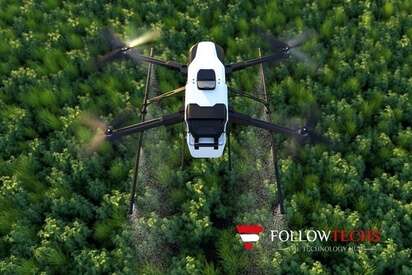
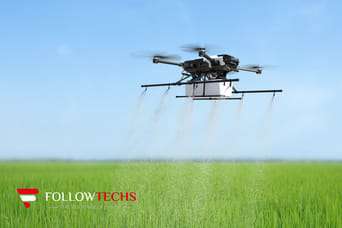
Advanced drones can even perform precision spraying, applying pesticides and fertilizers only where needed.
—
3. Artificial Intelligence (AI) and Machine Learning
AI and ML analyze massive data sets from sensors, drones, and weather models to generate actionable insights.
These technologies can:
Predict crop yields
Detect diseases early
Recommend precise irrigation and nutrient levels
Identify optimal planting times
Automate repetitive tasks
With continuous learning, AI systems improve over time and become even more accurate and valuable.
—
4. GPS and Precision Mapping
GPS technology enables high-precision farming operations.
GPS-guided tractors can follow exact paths for uniform planting and harvesting.
Variable Rate Technology (VRT), combined with field maps, adjusts fertilizer or pesticide application automatically based on each zone’s needs—improving efficiency and reducing waste.
—
5. Automated Irrigation Systems
Smart irrigation systems use data from sensors and weather forecasts to deliver the right amount of water at the right time.
These systems are often controlled remotely through mobile apps.
When combined with drip irrigation, smart controls can reduce water usage by up to 70% while improving yields.
—
Benefits of Smart Farming
1. Increased Productivity and Yields
Smart farming maximizes production through:
Precision application of inputs
Early detection of problems
Optimized planting schedules
Healthier and more uniform crops
All these factors significantly boost yields and crop quality.
—
2. Resource Efficiency and Cost Reduction
Smart farming reduces waste and cuts costs through:
Optimized water usage
Reduced fertilizer and pesticide consumption
Targeted pest and disease management
Lower labor expenses through automation
This leads to higher profitability with fewer inputs.
—
3. Environmental Sustainability
Smart farming protects the environment by:
Reducing chemical pollution
Conserving water resources
Lowering greenhouse gas emissions
Supporting biodiversity
Minimizing soil degradation
Technology helps farmers work with nature, not against it.
—
4. Enhanced Decision-Making
Real-time and historical data turn farming decisions from guesswork into science.
Farmers can analyze patterns, forecast challenges, and plan operations proactively using predictive analytics.
—
5. Improved Product Quality
With precise monitoring and controlled growing conditions, smart farming ensures:
Uniform maturity
Higher-quality produce
Early intervention against diseases
Optimal harvest timing
Resulting in premium-quality crops.
—
Implementation Challenges and Solutions
1. High Initial Investment
The cost of adopting smart farming technologies can be high, especially for small farms.
Solutions include:
Government subsidies
Financing programs
Cooperative purchasing
Gradual implementation
Long-term productivity gains typically outweigh initial costs.
—
2. Technical Knowledge Requirements
Smart farming requires new technical skills.
Solutions:
Training through agricultural extension services
Vendor support
Online courses and tutorials
User-friendly interfaces that reduce the learning curve
—
3. Connectivity and Infrastructure
Limited internet access in rural areas hinders real-time data transmission.
Solutions include:
Expanded broadband coverage
Satellite internet
Systems that store data offline and sync later
—
4. Data Management and Security
Smart farming generates huge amounts of data.
Key solutions:
Cloud-based storage
Cybersecurity protocols
Clear data ownership policies
Standardized formats for system integration
—
Future Trends in Smart Farming
1. Autonomous Farming Equipment
Future farms will rely on:
Autonomous tractors
AI-powered harvesters
Robotic swarms for planting and weeding
These tools will perform tasks with unmatched precision and minimal human intervention.
—
2. Vertical and Indoor Farming
Vertical farms and controlled-environment agriculture (CEA) use:
Hydroponics
Aeroponics
LED lighting
AI-controlled climate
They enable year-round production with minimal land and water use.
—
3. Blockchain for Supply Chain Transparency
Blockchain will support:
Transparent farm-to-table tracking
Smart contracts
Verification of food quality and sustainability
Consumer access to full product history
—
4. Integration of Biotechnology
Data-driven biotechnology will support:
Gene editing
Precision breeding
Development of resilient, nutrient-rich crop varieties
Faster improvement of drought- and disease-resistant traits
—
Implementing Smart Farming: A Practical Guide
1. Assessment and Planning
Farmers should begin by identifying areas that can benefit most from technology and setting clear goals such as:
Higher yields
Lower costs
Improved sustainability
A phased plan helps manage investment and learning.
—
2. Selecting Appropriate Technologies
Not all technologies fit every farm.
It’s best to start with core tools such as:
Soil sensors
GPS guidance
Basic monitoring devices
Consulting experts and experienced farmers helps make the right choices.
—
3. Training and Capacity Building
Training ensures successful adoption.
Farmers must learn how to operate systems, interpret data, and integrate new practices into daily operations.
—
4. Monitoring and Optimization
Smart farming requires continuous evaluation.
Regular data analysis helps refine practices, boost efficiency, and ensure the best return on investment.
Conclusion
Smart farming represents a major shift in agriculture, enabling farmers to produce more food with fewer resources while protecting the environment.
Despite challenges, the long-term benefits — improved productivity, higher quality, cost savings, and sustainability — make smart farming essential for future food security.
The future of agriculture is smart, sustainable, and data-driven.
Farmers who embrace this transformation today will be best prepared for the challenges of tomorrow.
